US Equities Edge Higher Despite First Fed Hike Since 2023
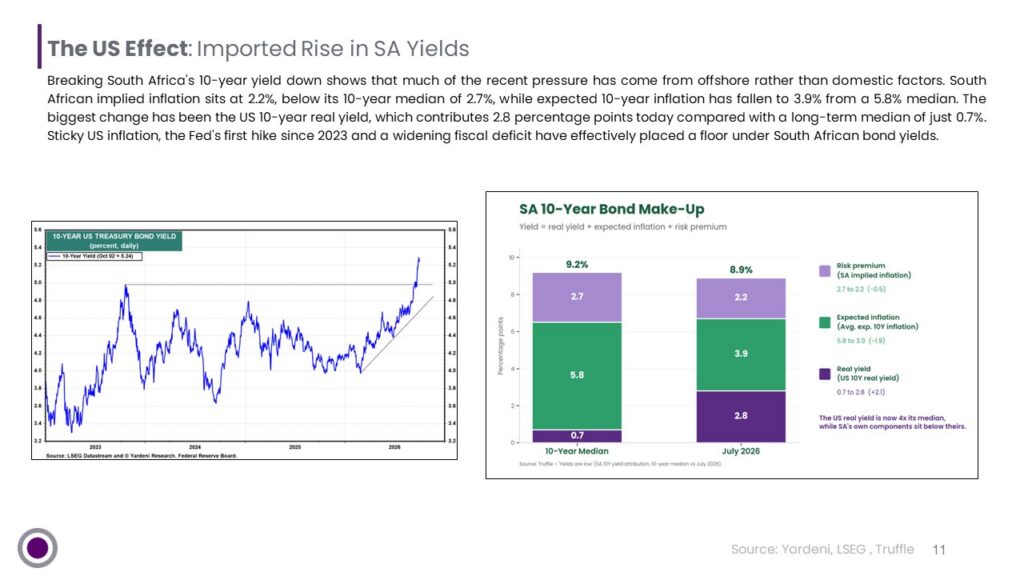
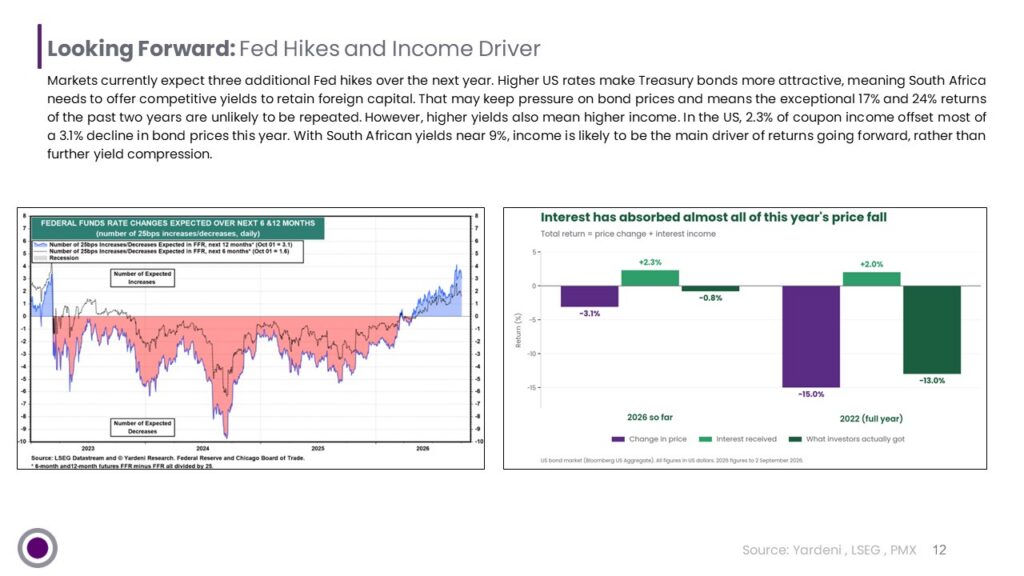
US equities extended their gains in September, with the S&P 500 gaining 1.3% MoM, despite the Federal Reserve raising interest rates for the first time since 2023. The Federal Open Market Committee (FOMC) unanimously lifted the federal funds rate by 25 bps to 3.75% – 4.00%. Fed Chair Kevin Warsh noted that inflation had remained too high for too long, while most officials indicated that a further rate increase may be appropriate before year-end. President Donald Trump and Chinese President Xi Jinping also met in Washington during Xi’s first visit to the city in a decade. However, the outcomes were largely limited to an extension of the existing trade truce and a joint review of AI risks, with key issues surrounding Taiwan and tariffs remaining unresolved. Meanwhile, oil prices above US$100 per barrel could add to inflationary pressures and introduce further market volatility.
Emerging Markets Outperform as Europe and China Lag
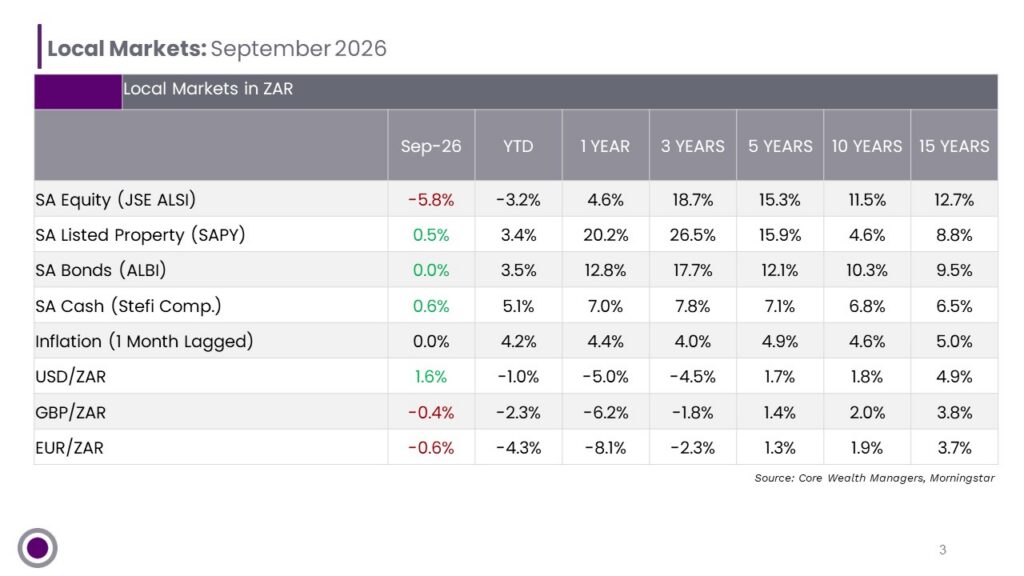
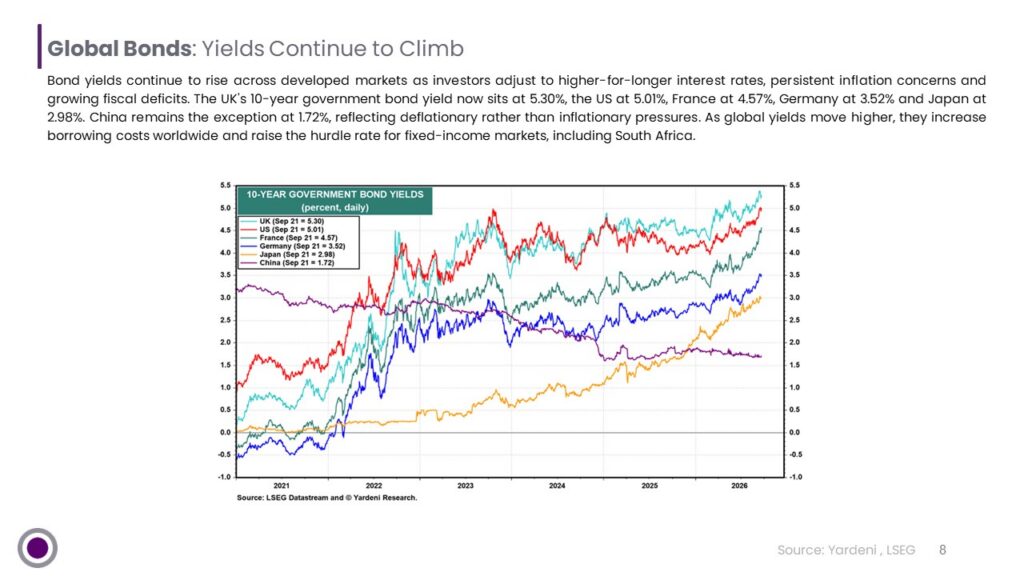
Emerging market equities outperformed their developed-market counterparts in September, with the MSCI Emerging Markets Index returning 1.1% MoM, compared with 0.4% for the MSCI World Index. Japan was a notable outperformer, with the Nikkei 225 gaining 4.6%, while Chinese equities declined by 3.8% MoM as Tencent came under pressure. European markets also weakened, with the EURO STOXX 50 falling 3.0% MoM and the FTSE 100 declining 2.4% MoM. Rising global yields pushed global bonds 3.7% lower MoM , while also weighing on expectations of a sustained European economic recovery.
South African Equities Retreat as Resource Shares Weaken
South African equities reversed their August gains in September, with the JSE ALSI falling 5.8% MoM. Gold miners declined by 15% as gold prices retreated, while Gold Fields’ A$39 billion (US$27 billion) takeover offer for Northern Star Resources, Australia’s largest gold producer, was rejected. The proposed transaction would have created the world’s second-largest gold producer. The SARB unanimously raised the repo rate by 25 bps to 7.25%, taking the prime lending rate to 10.75%, citing renewed inflation risks from global uncertainty and the geopolitically