Strong Earnings and Easing Oil Tensions Underpin Global Rally
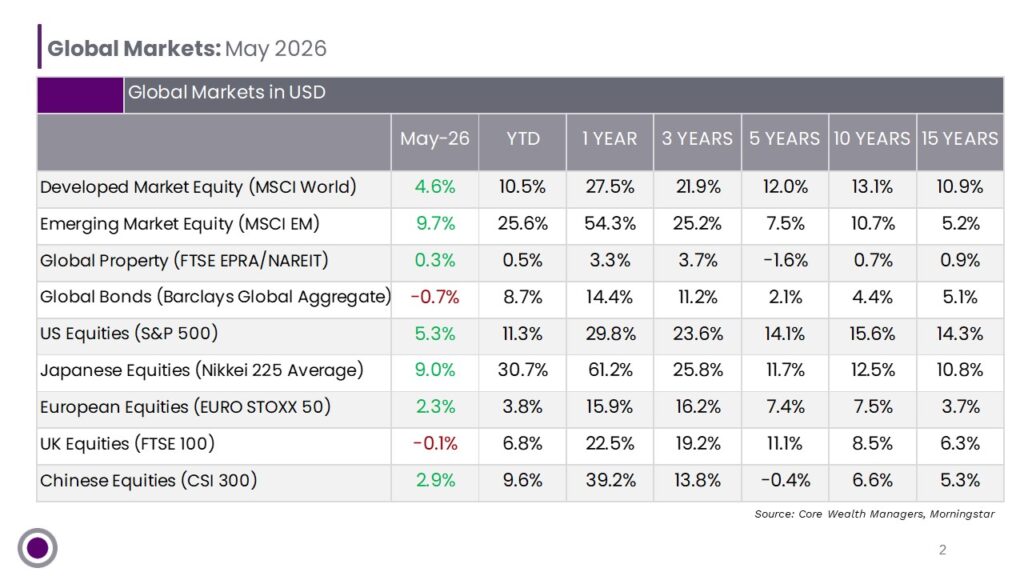
Developed markets (MSCI World) returned +4.6% MoM (+10.5% YTD), led by the S&P 500 (+5.3%) on the back of robust Q1 earnings. Approximately 85% of reporting companies beat earnings estimates, with earnings growth tracking at +28.6% YoY. Japan’s Nikkei surged +9.0% as the AI chip frenzy lifted sentiment, although the Bank of Japan (BOJ) flagged persistent inflation risks and raised its core CPI forecast to 2.8% from 1.9%.
European equities added +2.3%, with the European Central Bank widely expected to implement a further 25 basis point rate hike at its June meeting. Oil prices fell by approximately 20% from their 2026 peaks as US-Iran ceasefire talks progressed, with Brent crude closing May at approximately US$92.56/bbl, although disruptions around the Strait of Hormuz continue to pose risks to supply.
Emerging Markets Surge on AI Tailwinds, but Trade Risks Loom
Emerging markets rallied sharply in May, with the MSCI Emerging Markets Index returning +9.7% MoM (+25.6% YTD), driven largely by Asia’s dominant role in the global AI supply chain. NVIDIA reported record Q1 revenue of US$81.6 billion (+85% YoY), declaring that “agentic AI has arrived”, while hyperscalers committed approximately US$725 billion in 2026 capital expenditure towards AI infrastructure.
China’s CSI 300 gained +2.9%, although domestic momentum softened as retail sales growth slowed to just +0.2% YoY, keeping expectations alive for additional stimulus measures from Beijing. Meanwhile, the US proposed fresh Section 301 tariffs on imports from 60 economies, adding further complexity for emerging market exporters.
SARB Hikes to 7% Amid Geopolitical Headwinds and Rising Inflation
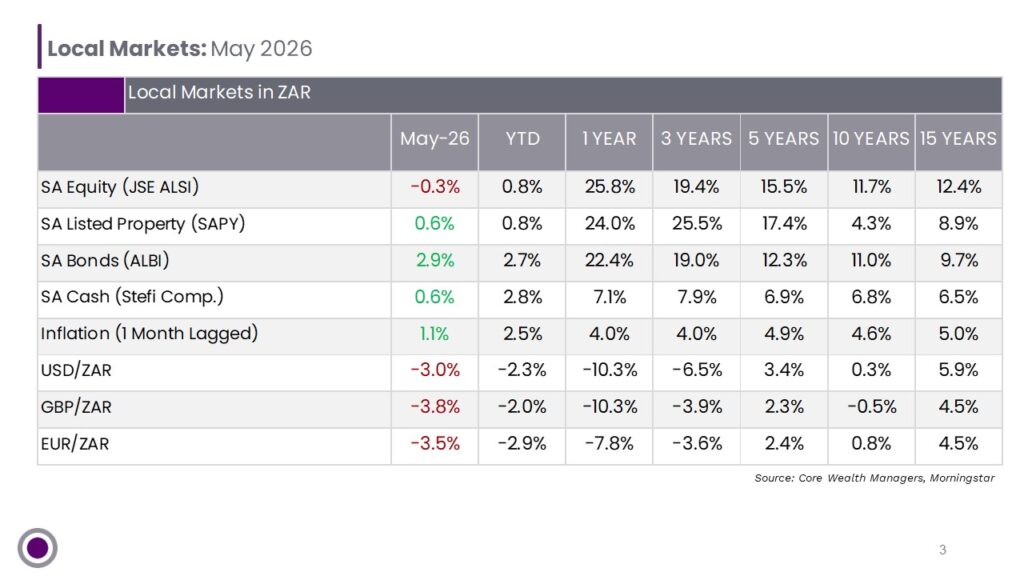
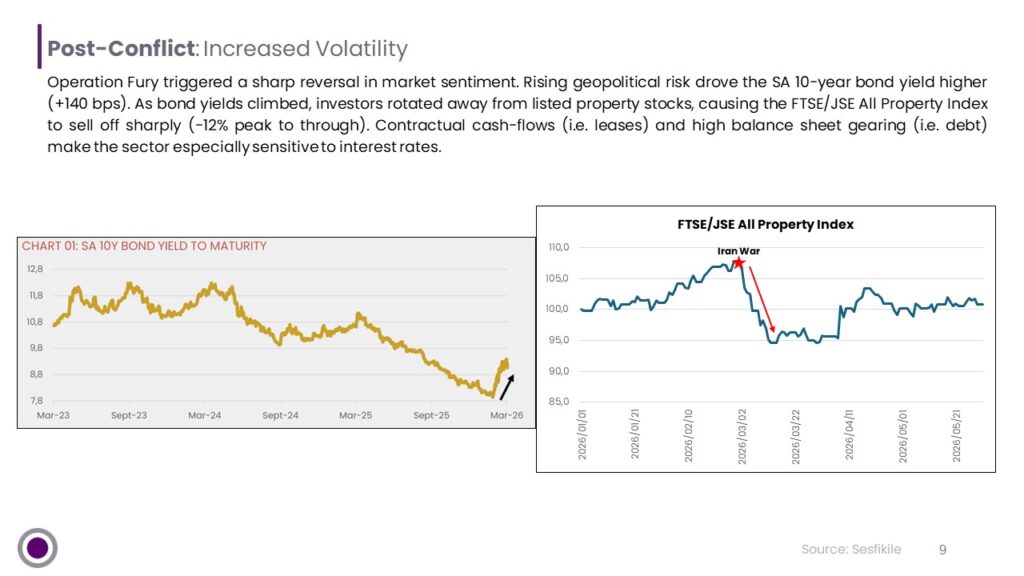
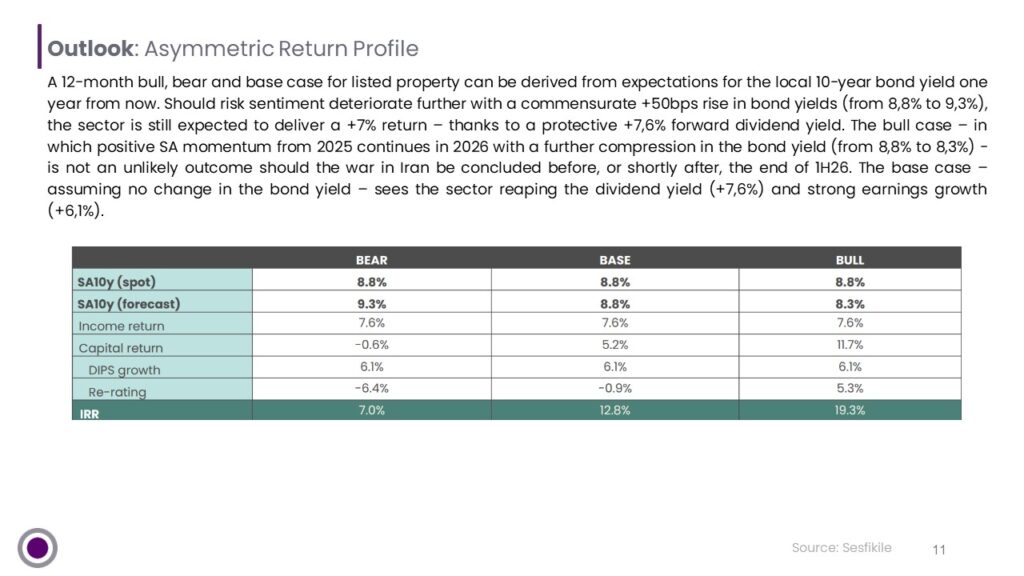
South African markets delivered a mixed performance in May, with SA Bonds (ALBI) returning +2.9% MoM, SA Listed Property (SAPY) +0.6% MoM, and SA Cash +0.6% MoM, while SA Equity (JSE ALSI) edged lower at -0.3% MoM, against lagged inflation of +1.1% MoM. The SARB’s Monetary Policy Committee (MPC) raised the repo rate by 25 basis points to 7.0%, citing heightened inflation risks and potential second-round effects. Four members voted in favour of the hike, while two preferred to keep rates unchanged.
The decision comes amid persistent geopolitical tensions and disruptions to global oil supply routes, including the Strait of Hormuz, which have contributed to ongoing volatility in oil prices. South Africa’s headline inflation accelerated to 4.0% YoY in April, driven primarily by higher transport (+5.2% YoY) and utilities costs (+4.9% YoY).
Meanwhile, S&P Global Ratings affirmed South Africa’s BB foreign currency and BB+ local currency sovereign credit ratings, while maintaining its positive outlook. Moody’s Ratings also revised South Africa’s outlook from stable to positive, reinforcing confidence in the country’s fiscal and economic trajectory. South Africa remains the only G20 country currently carrying a positive outlook from both major rating agencies.