Middle East Conflict Reshapes the Global Economic Landscape
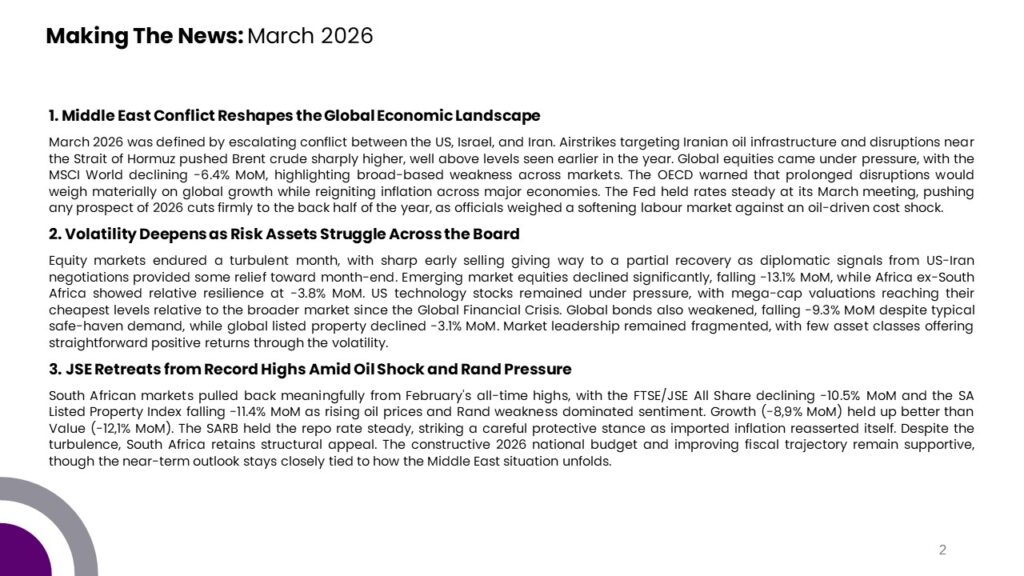
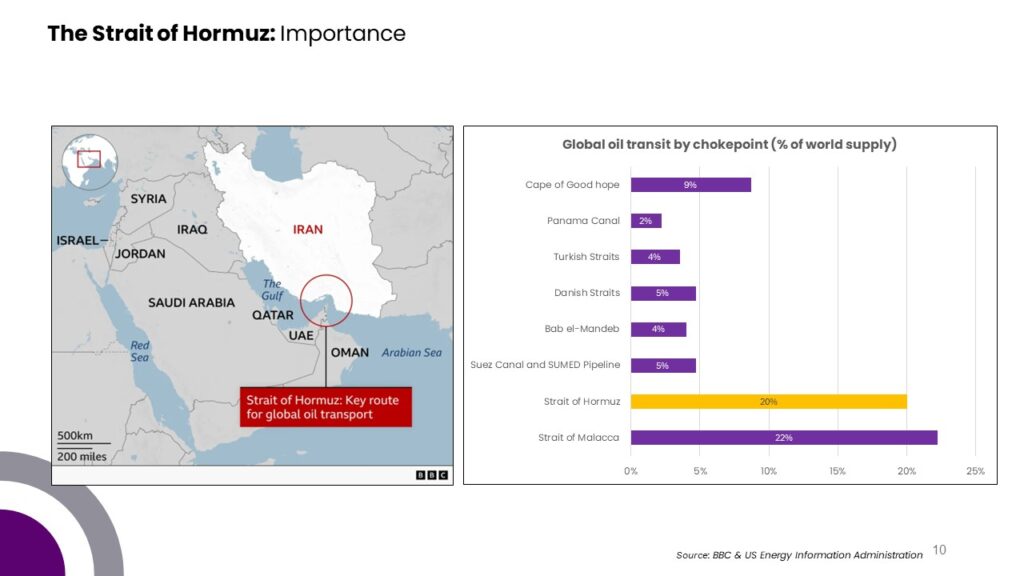
March 2026 was marked by escalating tensions involving the US, Israel, and Iran. Airstrikes targeting Iranian oil infrastructure, coupled with disruptions near the Strait of Hormuz, drove Brent crude prices sharply higher, well above levels seen earlier in the year.
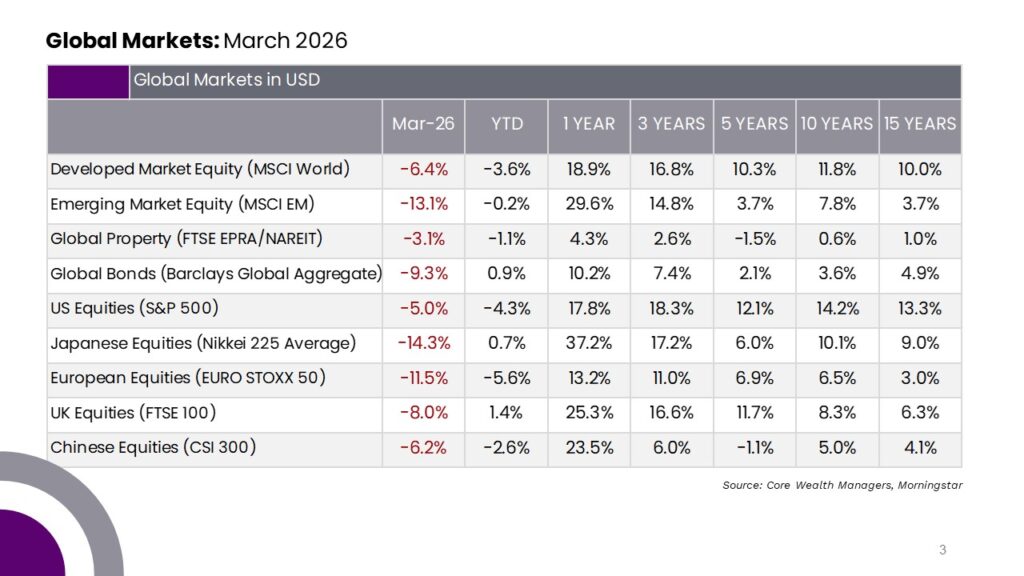
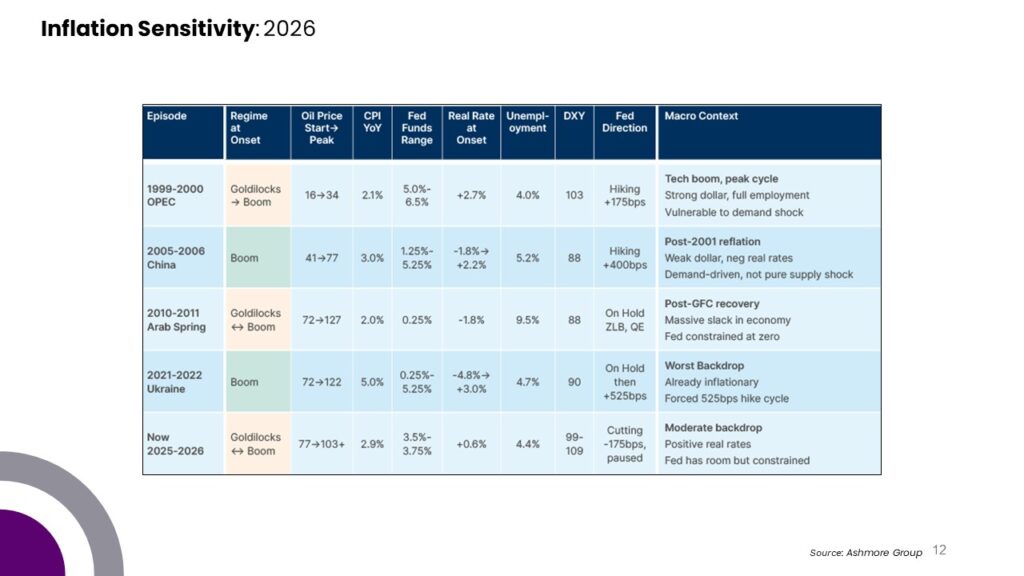
Global equities came under notable pressure, with the MSCI World declining by 6.4% month-on-month (MoM) reflecting broad-based weakness across markets. The OECD cautioned that prolonged supply disruptions could materially weigh on global growth while reigniting inflationary pressures across major economies.
The Fed held rates steady at its March meeting, effectively pushing any potential rate cuts in 2026 to the latter part of the year, as policymakers weighed a softening labour market against an oil-driven cost shock.
Volatility Deepens as Risk Assets Struggle Across the Board
Equity markets experienced a turbulent month, with sharp early sell-offs giving way to a partial recovery as diplomatic signals from US-Iran negotiations provided some relief toward month-end.
Emerging market equities declined significantly, falling 13.1% MoM, while African markets excluding South Africa showed relative resilience, declining by 3.8% over the same period. US technology stocks remained under pressure, with mega-cap valuations reaching their cheapest levels relative to the broader market since the Global Financial Crisis.
Global bonds also weakened, falling -9.3% MoM despite typical safe-haven demand, while global listed property declined -3.1% MoM. Market leadership remained fragmented, with few asset classes offering straightforward positive returns through the volatility.
Global bonds also weakened, declining by 9.3% MoM despite typical safe-haven demand, while global listed property fell by 3.1% MoM. Market leadership remained fragmented, with few asset classes offering clear positive returns amid heightened volatility.
JSE Retreats from Record Highs Amid Oil Shock and Rand Pressure
South African markets pulled back meaningfully from February’s all-time highs, with the FTSE/JSE All Share declining 10.5% MoM and the SA Listed Property Index falling 11.4% over the same period, as rising oil prices and rand weakness weighed on sentiment.
Growth stocks (-8,9% MoM) held up better than value stocks (-12,1% MoM). The South African Reserve Bank (SARB) held the repo rate steady, adopting a cautious stance as imported inflationary pressures re-emerged.
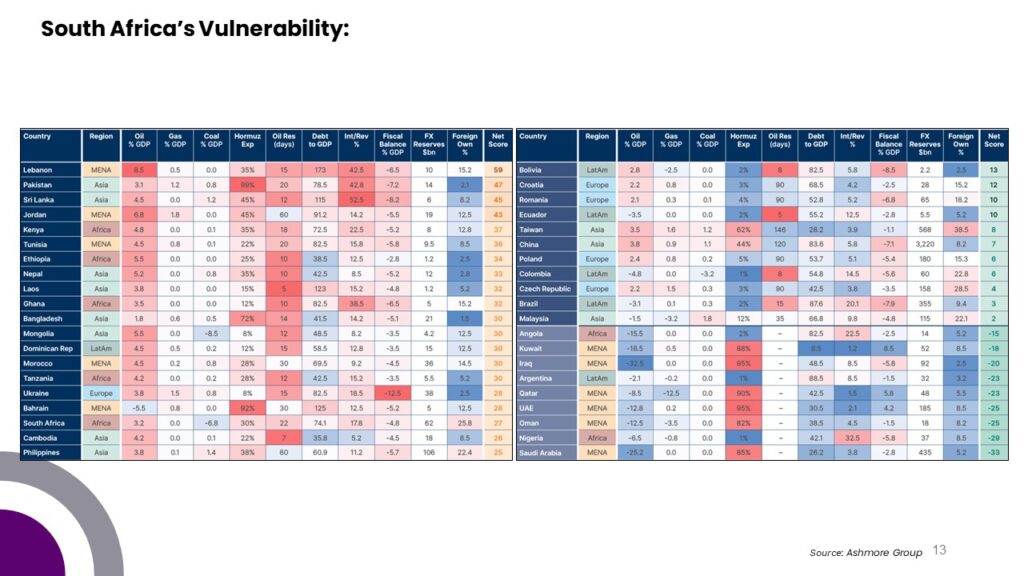
Despite the turbulence, South Africa retains structural appeal. The constructive 2026 national budget and an improving fiscal trajectory remain supportive, although the near-term outlook remains closely tied to developments in the Middle East.