Making The News
- Policy Uncertainty Drives Volatility Higher
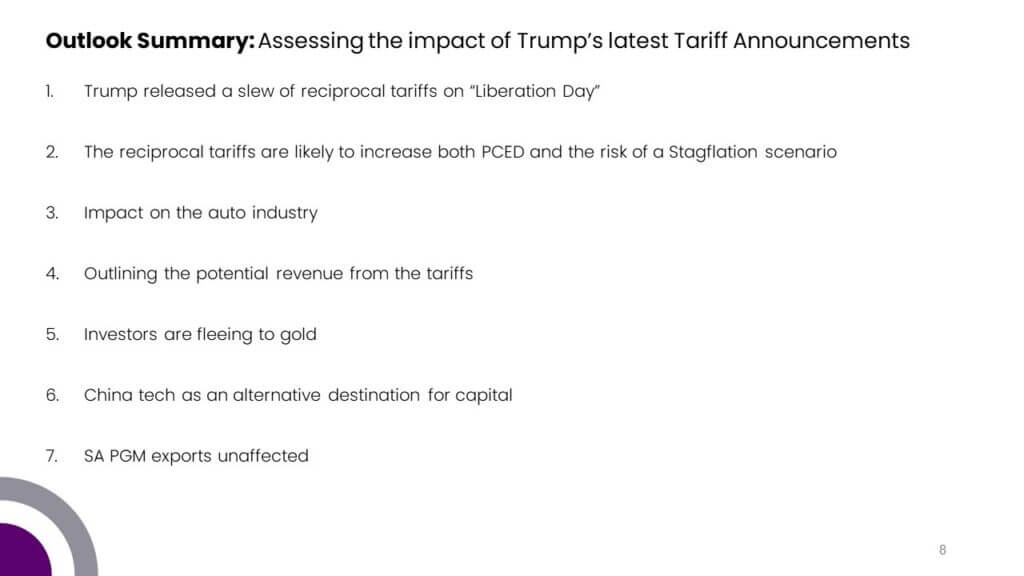
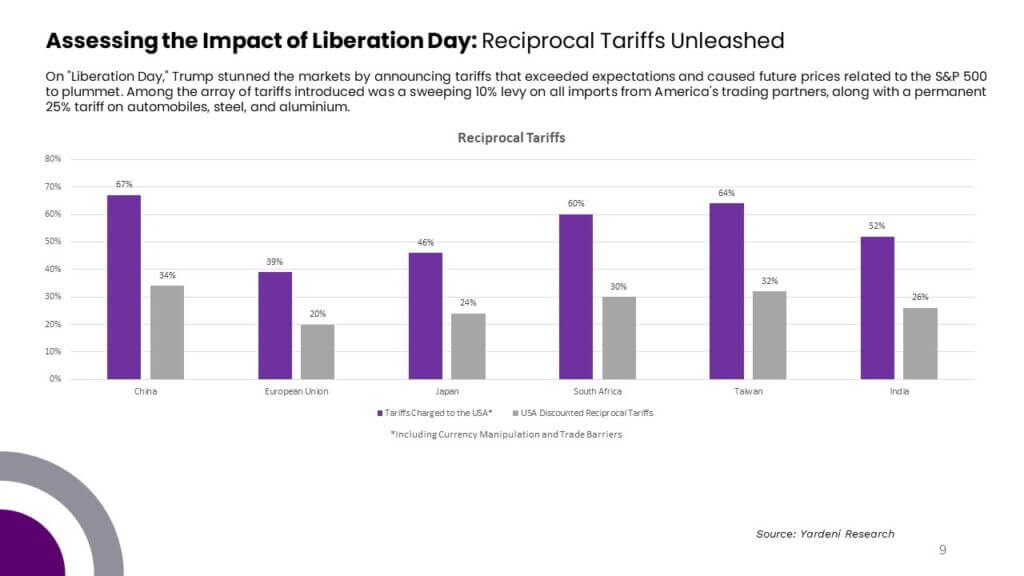
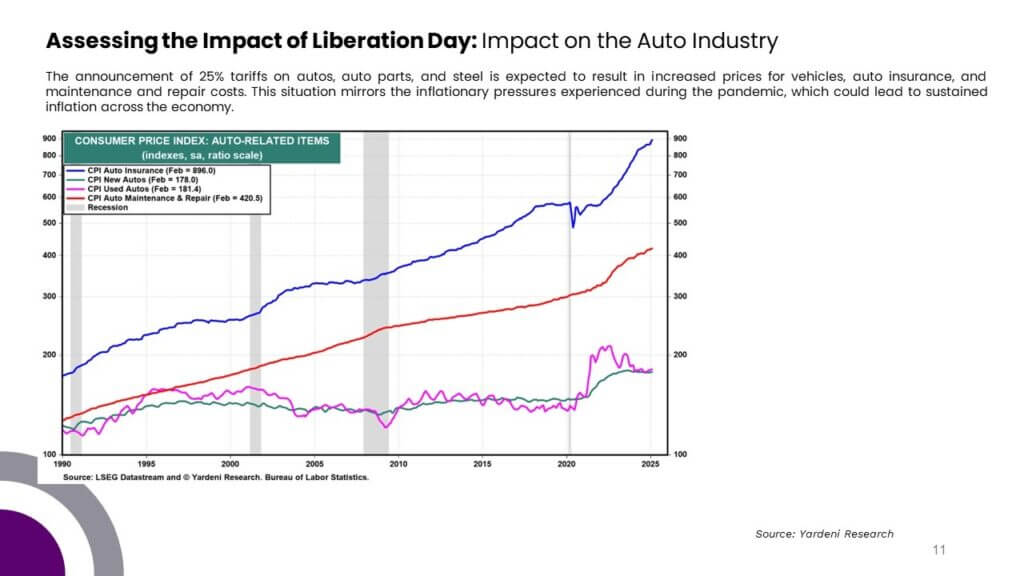
Policy uncertainty has led to increased market volatility, with the CBOE Volatility Index (VIX) spiking to an intraday high of 29.57 in March before closing the month at 22.28, up from 17.35 at the end of December. Market turbulence was fuelled by Donald Trump’s decision to implement a 25% tariff on all auto imports, effective 2 April. These tariffs, which Trump declared “permanent,” are expected to disrupt North American automakers and increase costs for U.S. consumers. The uncertainty surrounding trade policies has contributed to investor unease, adding to broader market concerns.
- Developed Equity Markets Face Headwinds
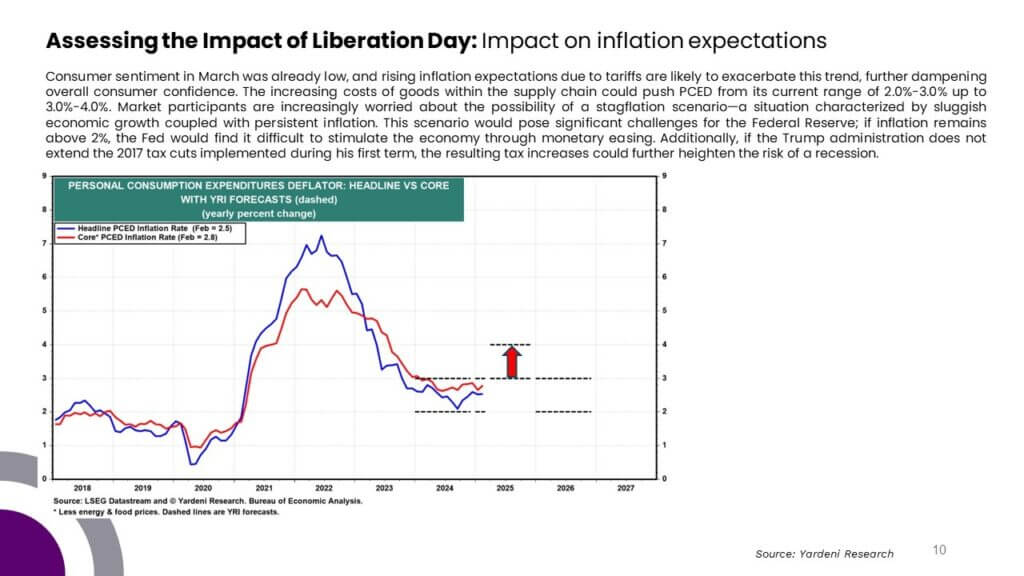
Global equity markets struggled in March, with increasing U.S. recession fears, high valuations, persistent inflation, and weak consumer sentiment weighing on investor confidence. U.S. equities recorded a poor first quarter, with all three major indices posting significant declines. The S&P 500 lost 5.8% month-on-month (-4.6% YTD), the Dow Jones Industrial Average fell 4.2% (-1.3% YTD), and the Nasdaq declined sharply by 8.2% (-10.4% YTD). European equities also recorded their first monthly decline this year, with Germany’s DAX down 1.7% and France’s CAC lower by 4.0%, as well as Japan’s Nikkei 225 dropping 4.1%.
- China’s Economy Shows Resilience
Despite trade concerns, China’s equity markets ended the month slightly higher, supported by positive policy signals from Beijing and optimism around new technological innovations. Hong Kong’s Hang Seng Index rose 0.8% (+15.3% YTD), while the Shanghai Composite edged up 0.4% (-0.5% YTD). China’s manufacturing sector continued to expand, with the official March Purchasing Managers’ Index (PMI) reaching 50.5, its highest level since March 2024, up from 50.2 in February. The non-manufacturing PMI, which includes services and construction, also improved to 50.8 from 50.4 in the prior month, suggesting broader economic stabilization.
- Safe-Haven Demand Boosts South African Resource Stocks
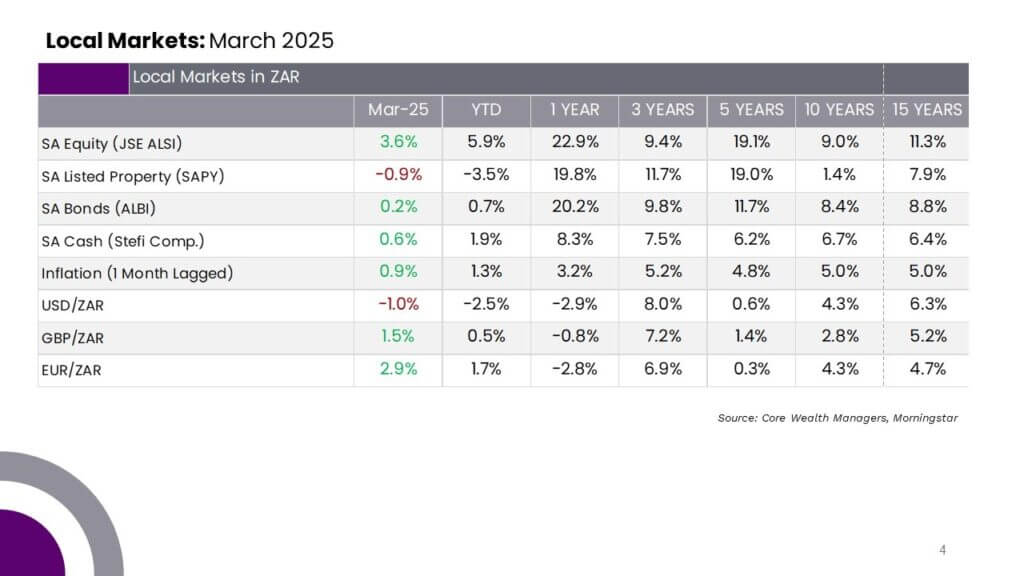
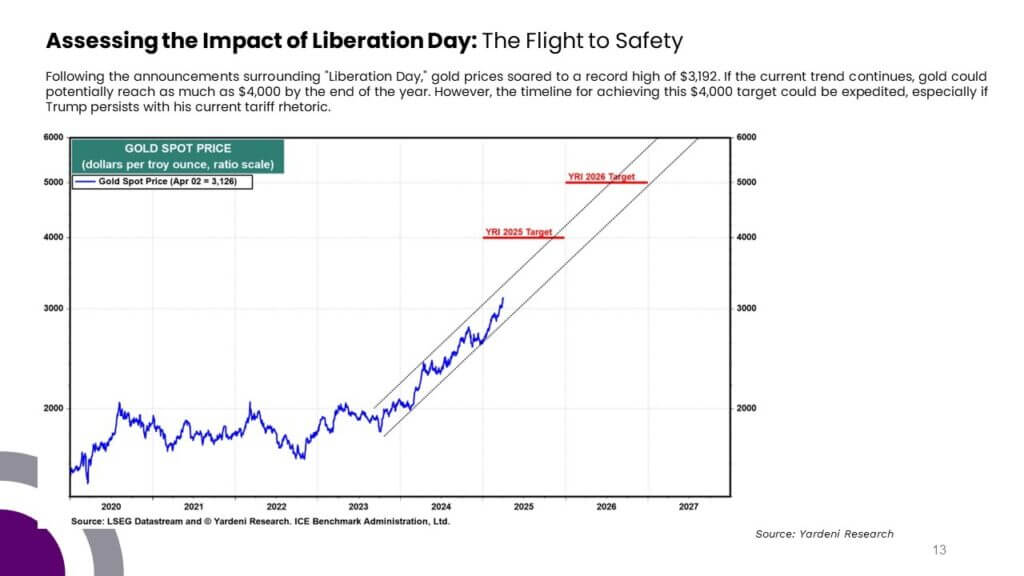
A strong flight to safety benefited the South African resource sector, as gold surged 9.3% month-on-month (+19.0% YTD), reaching a record high of US$3,145/oz. Platinum rose 5.1% (+9.9% YTD), while palladium advanced 7.4% (+8.6% YTD). Brent crude oil increased by 2.1% (+0.1% YTD) amid concerns over potential supply disruptions linked to further U.S. trade actions against Russia and rising geopolitical tensions with Iran. South African equities performed strongly, with the FTSE JSE All Share Index gaining 3.1% in March (+5.4% YTD) and closing at an all-time high of 90,149.7 on 19 March. The Capped SWIX rose 3.6% (+5.9% YTD), driven largely by mining stocks. The Resi-10 index surged by an impressive 19.5% in March (+32.3% YTD), highlighting the significant contribution of the resource sector to market performance.