AI Reckoning Grips Global Markets as China Closes the Gap
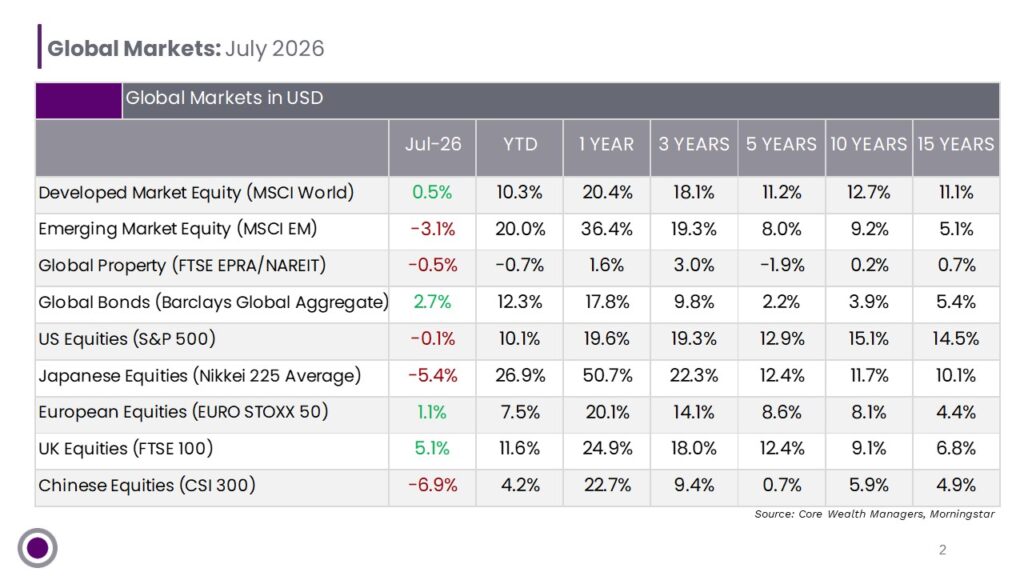
A new model from Chinese firm Moonshot jolted global technology markets in July, dragging chipmakers, memory producers and data-centre builders lower. Kimi K3 ranked ahead of Anthropic’s Opus 4.8 on an independent benchmark, becoming the first Chinese open-weight model to top a leading US peer, and reigniting concerns over whether hyperscalers investing hundreds of billions of dollars in AI infrastructure will generate adequate returns. Bloomberg forecasts AI capex will hit US$963bn in 2027. Alphabet shares fell 7% following its results, despite Google Cloud revenue growing by 82%, as the company reported its first negative free-cash-flow quarter since listing. The Silicon Data LLM Token Index has fallen approximately 30% from its May peak, although the MSCI World Index still gained 0.5% MoM and is up 10.3% YTD in rand terms.
Oil and Tariffs Return as Compounding Risks for Emerging Markets
Brent crude moved back above US$100/bbl as renewed US-Iran hostilities and Houthi attacks in the Red Sea heightened the risk of simultaneous disruption across the Strait of Hormuz and Bab-el-Mandeb. Crucially, even when crude prices eased, refined product prices remained elevated, with approximately eight million barrels per day of refining capacity (around 10% of global capacity) offline across the Middle East, China and Russia. Tariffs also returned to focus when the US implemented additional Section 301 forced-labour tariffs on 24 July, leaving South African exports subject to a 12.5% rate. Together with a hawkish US Federal Reserve and a stronger dollar, these compounding pressures support a more cautious outlook for emerging markets, including South Africa.
South African Equities Rebound as SARB Backs Growth
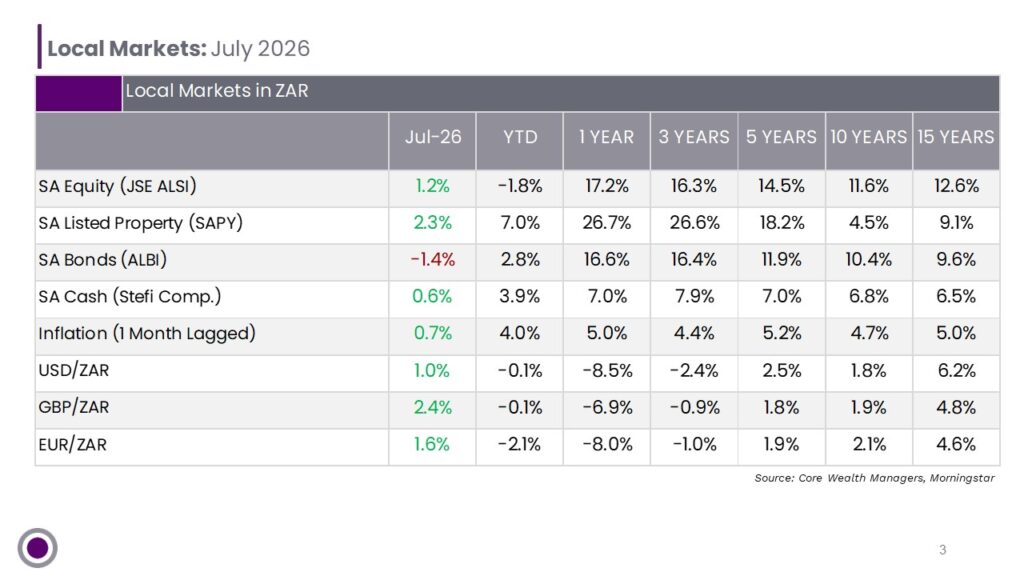
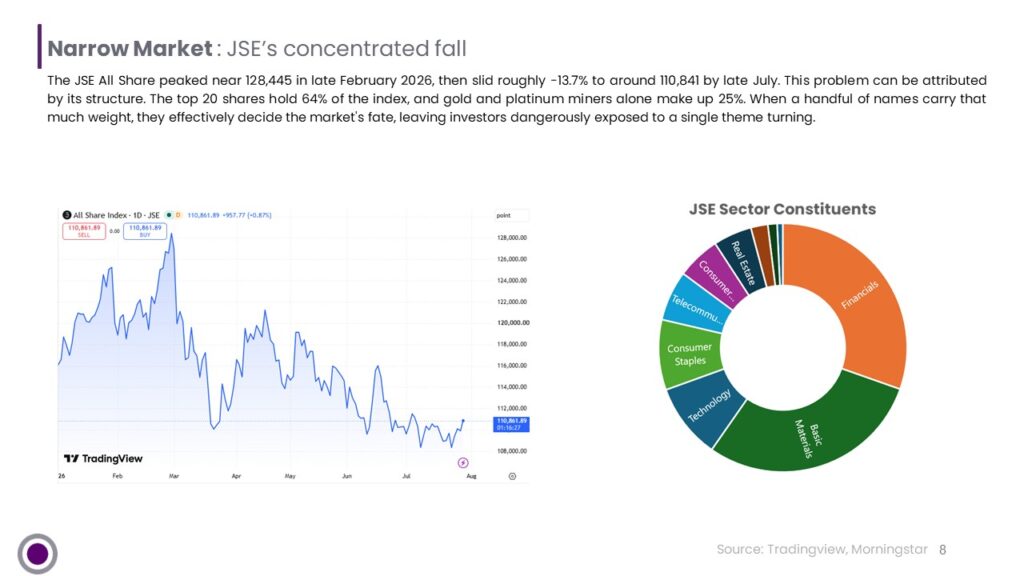
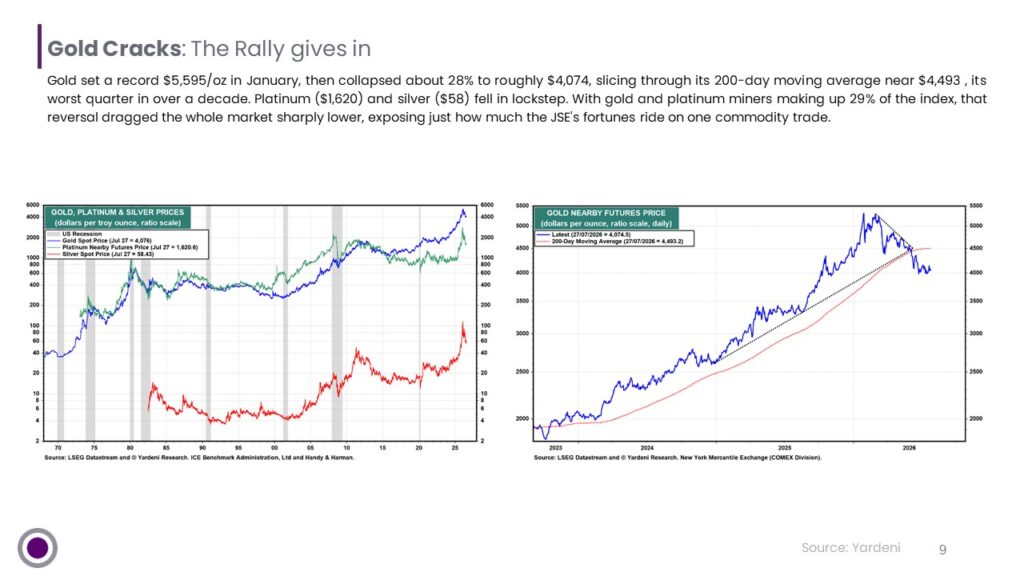
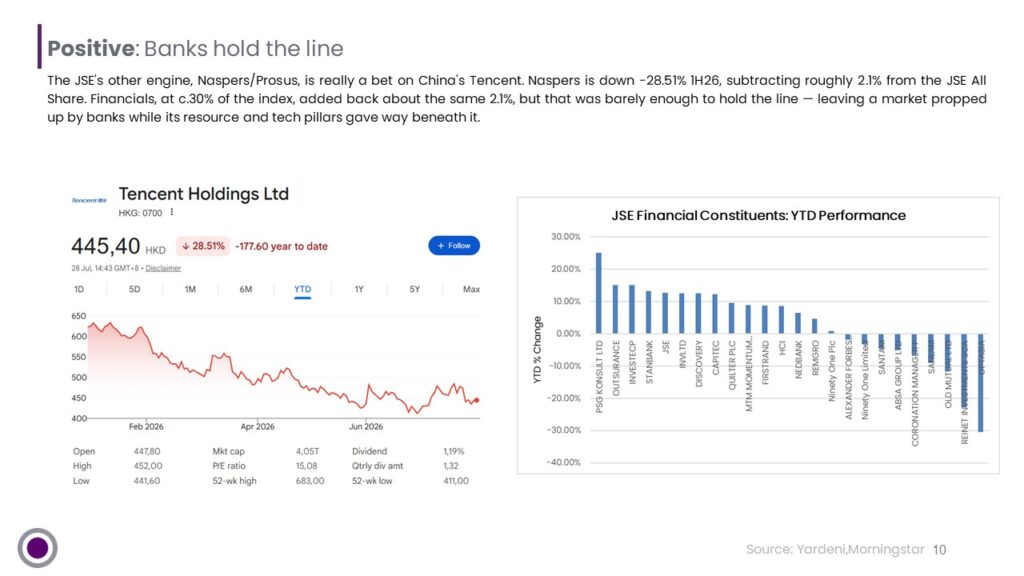
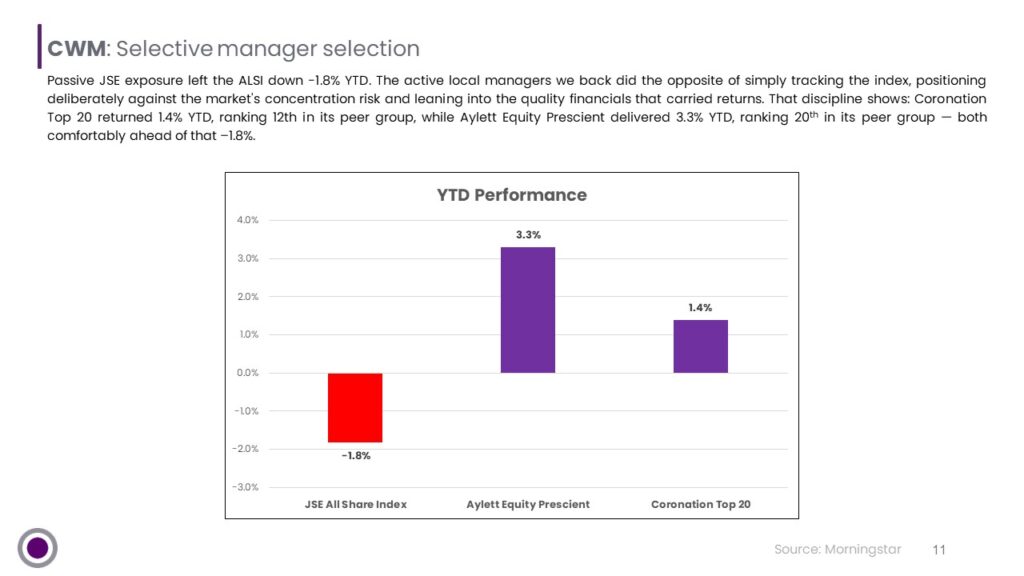
South African equities appear more attractive following a sharp sell-off and emerging tailwinds, even as the JSE All Share Index gaining 1.2% MoM and 17.2% over one year. The SARB held the repo rate at 7% in July despite June inflation rising to 5% (above the 4.7% consensus forecast), a deliberate trade-off prioritising weak growth that lifted equities but weighed on bonds (ALBI -1.4% MoM) and the rand. A structural tailwind for gold is also emerging: China added approximately 14.9 tonnes to its reserves in June, its largest monthly purchase since October 2023, providing additional support for South African resource shares.