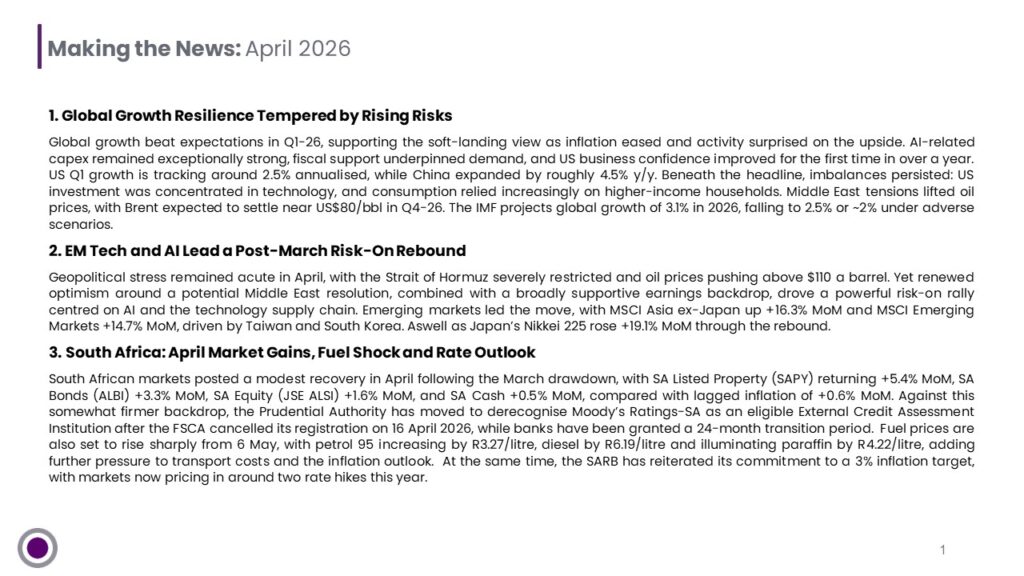
Global Growth Resilience Tempered by Rising Risks
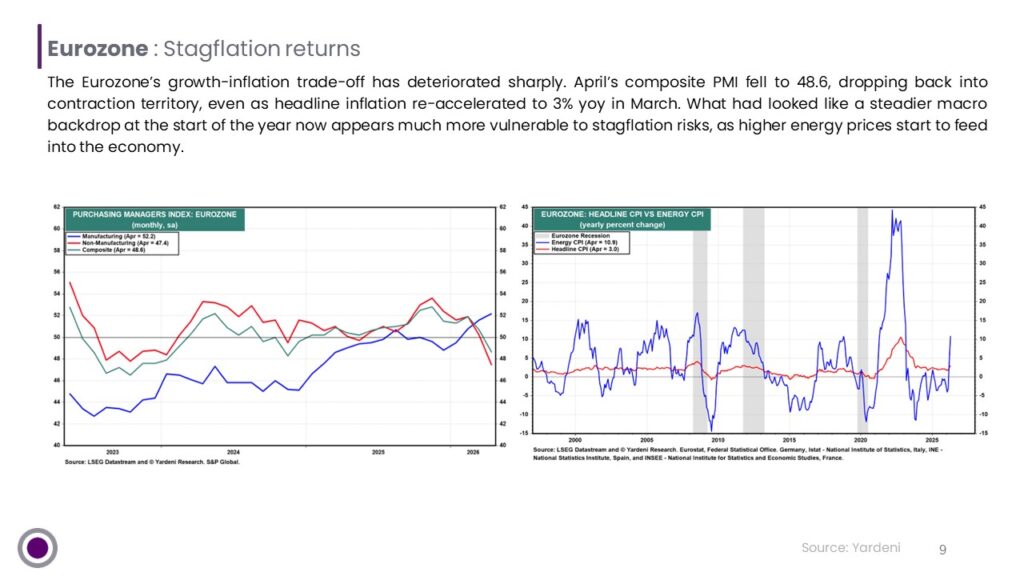
Global growth exceeded expectations in Q1 2026, supporting the soft-landing narrative as inflation eased and economic activity surprised on the upside. AI-related capital expenditure remained exceptionally strong, fiscal support continued to underpin demand, and US business confidence improved for the first time in over a year. US Q1 growth is tracking at approximately 2.5% annualised, while China expanded by around 4.5% year-on-year.
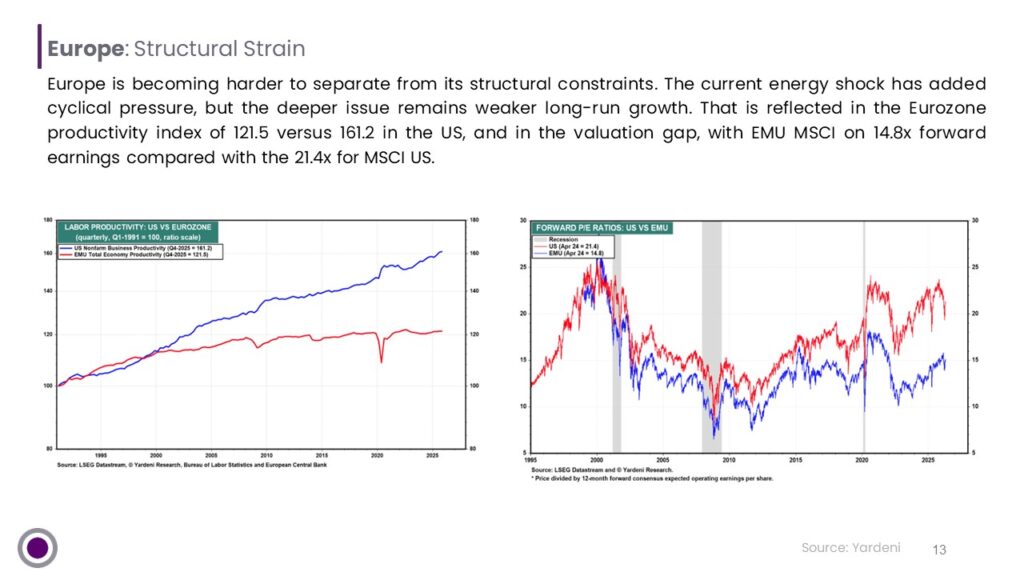
Beneath the headline figures, however, imbalances persisted, with US investment heavily concentrated in technology and consumption relied increasingly on higher-income households. Tensions in the Middle East lifted oil prices, with Brent crude expected to settle near US$80/bbl in Q4 2026. The IMF projects global growth of 3.1% in 2026, declining to 2.5% or ~2% under adverse scenarios.
EM Tech and AI Lead a Post‑March Risk‑On Rebound
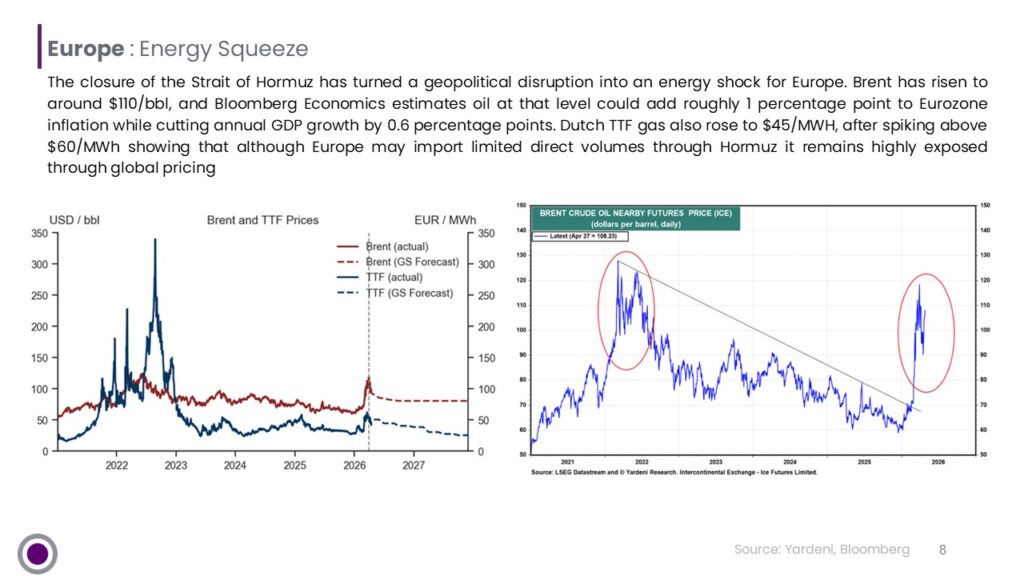
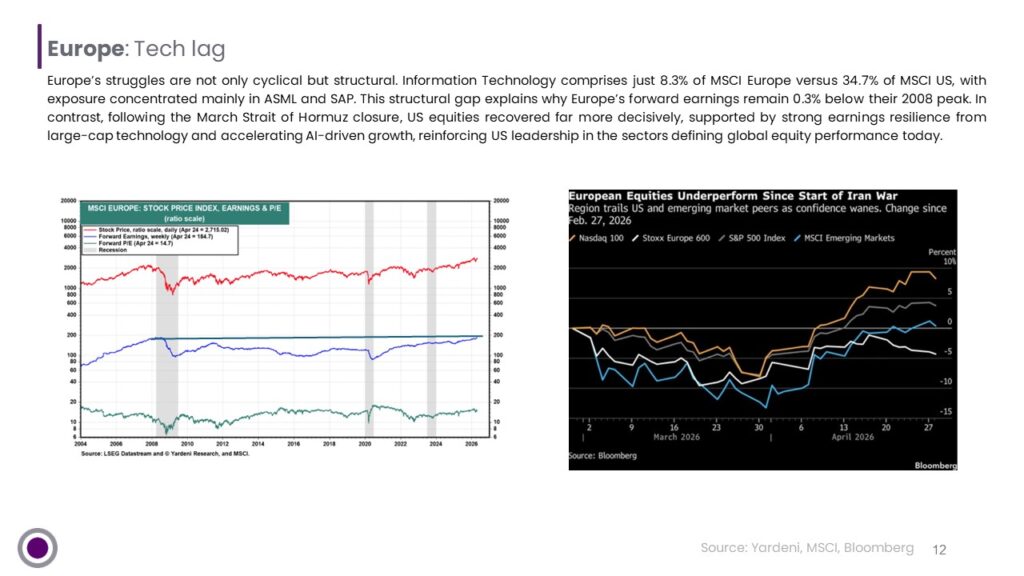
Geopolitical tensions remained elevated in April, with severe restrictions in the Strait of Hormuz pushing oil prices above US$110 per barrel. Despite this, renewed optimism around a potential Middle East resolution, together with a broadly supportive earnings backdrop, drove a strong risk-on rally centred around AI and the broader technology supply chain.
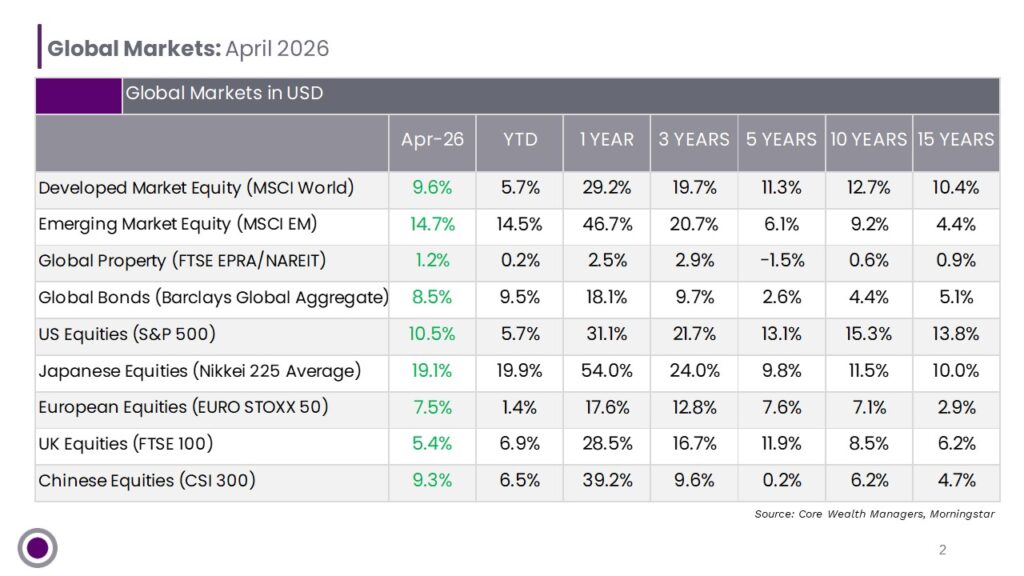
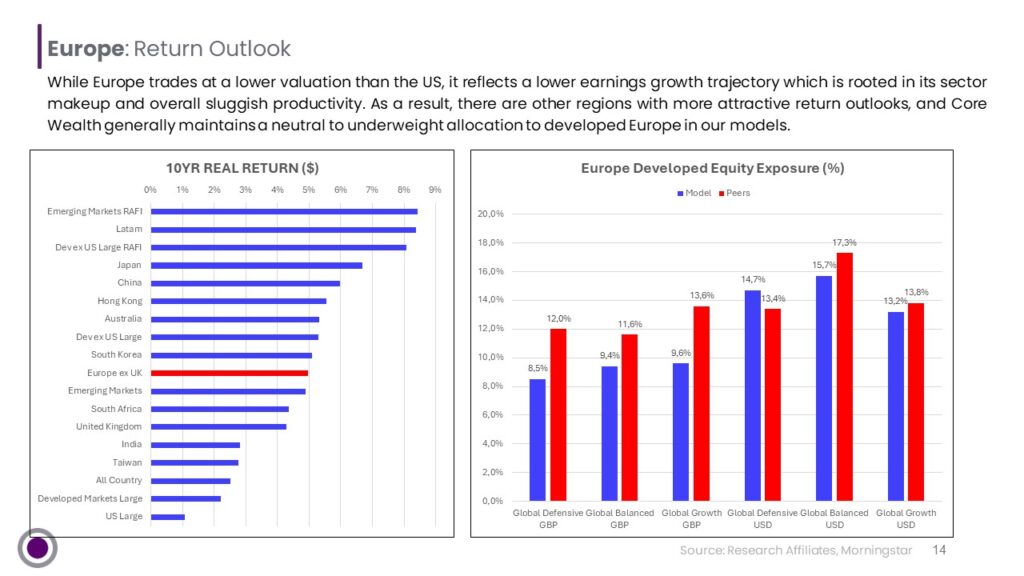
Emerging markets led the rebound, with MSCI Asia ex-Japan up +16.3% Month-on-Month (MoM) and MSCI Emerging Markets gaining +14.7% MoM, largely driven by Taiwan and South Korea. Japan also participated strongly in the recovery, with the Nikkei 225 increasing +19.1% MoM.
South Africa: April Market Gains, Fuel Shock and Rate Outlook
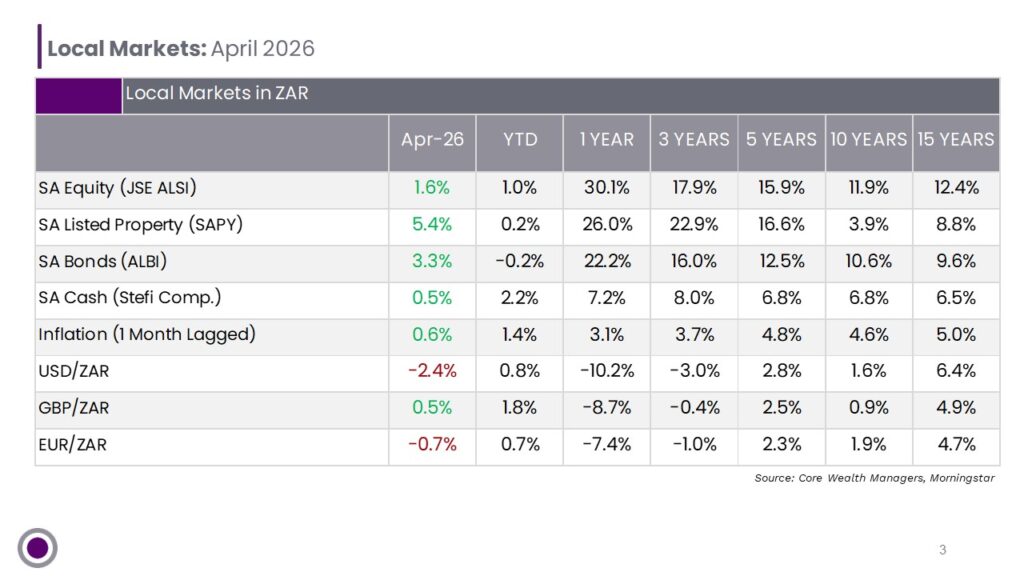
South African markets posted a modest recovery in April following the March drawdown. SA Listed Property (SAPY) returned +5.4% MoM, SA Bonds (ALBI) +3.3% MoM, SA Equity (JSE ALSI) +1.6% MoM, and SA Cash +0.5% MoM, compared with lagged inflation of +0.6% MoM.
Against this somewhat firmer backdrop, the Prudential Authority moved to derecognise Moody’s Ratings-SA as an eligible External Credit Assessment Institution after the FSCA cancelled its registration on 16 April 2026, although banks have been granted a 24-month transition period. Fuel prices also increased sharply on 6 May, with petrol 95 rising by R3.27/litre, diesel by R6.19/litre, and illuminating paraffin by R4.22/litre, placing further pressure on transport costs and the inflation outlook.
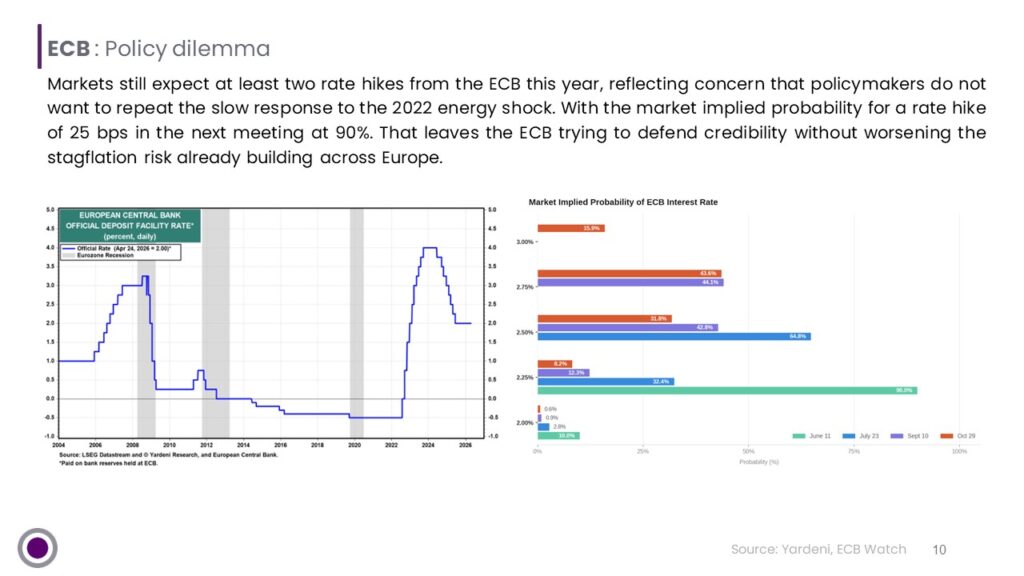
At the same time, the SARB has reiterated its commitment to a 3% inflation target, with markets now pricing in approximately two rate hikes this year.